Why Being Ridiculously Generous With Referrals Actually Makes Business Sense
I'm about to tell you something that will make most business owners think I've lost my mind.
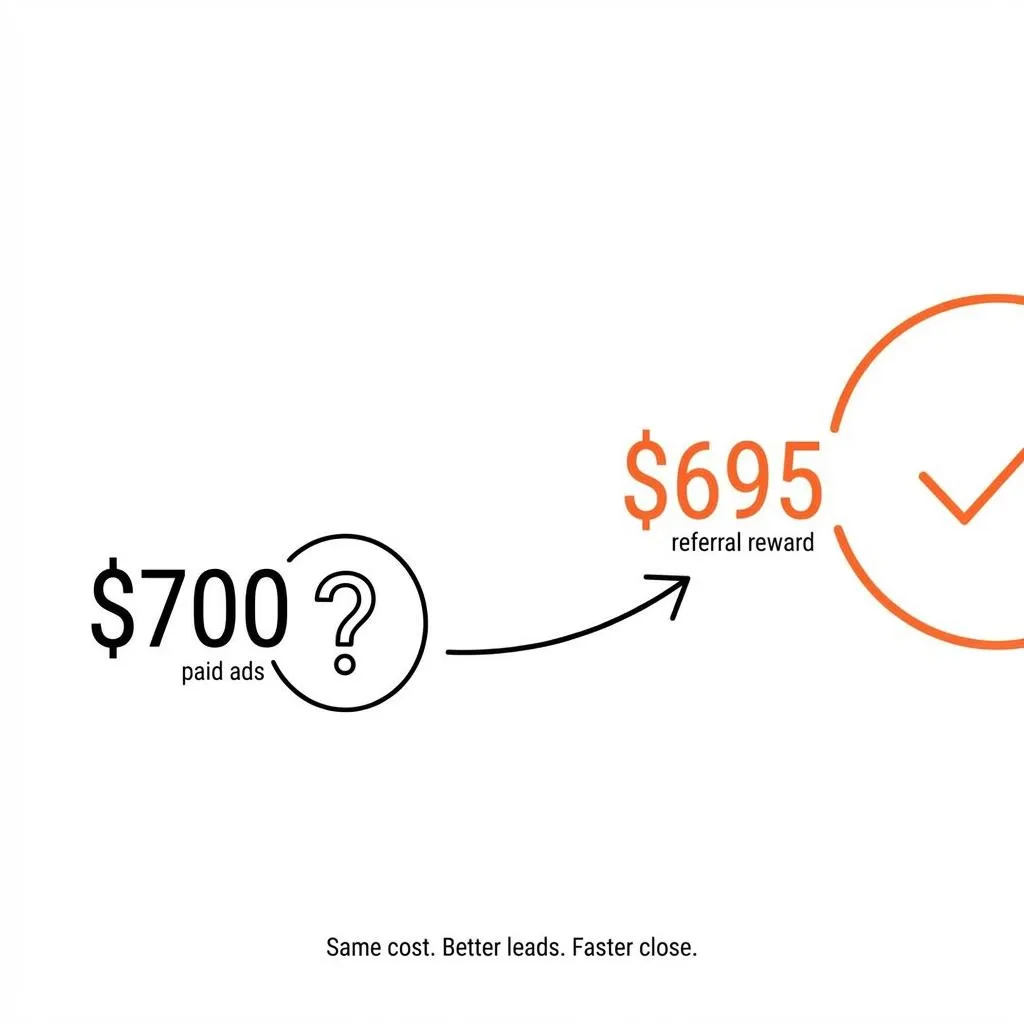
At Katuva, we give away $695 in value every time someone refers a new client to us. We literally cover an entire month of their virtual assistant costs. For free.
And here's the part that really gets people: this "insane" referral program has been our primary driver of growth for years.
When I tell other business owners about this approach, I can see it in their faces. They're doing the mental math. They're thinking about their own stingy $50 Amazon gift card programs that nobody uses. They're wondering if I understand basic economics.
I do. That's exactly why we do it.
The Math Problem Most Business Owners Get Backwards
Here's what happened when my partner and I sat down to figure out our referral strategy.
We pulled up our Facebook and Google ad costs. We calculated the entire timeline of our sales process. We looked at what it actually cost us to acquire a new client through paid advertising.
The number? More than $700. Every single time.
So when we landed on $695 as our referral reward, it wasn't generosity. It was just math.
But here's where it gets interesting. The leads coming from Facebook and Google ads weren't just expensive. They were way less qualified than referral leads.
And the data backs this up. Research shows that referral leads convert at rates between 10-30%, with some programs exceeding 50%. Compare that to general conversion rates of just 1-3% for other channels.
Think about that for a second. We were paying more money for leads that were harder to close.
The $695 reward wasn't crazy. It was conservative.
The Buyer's Journey Gap Nobody Talks About
Let me walk you through what actually happens with these two types of leads.
Someone clicks a Facebook ad. They've never heard of virtual assistants before. They're at the very beginning of their buyer's journey. They need to understand the concept, research competitors, shortlist vendors, and then make a decision.
That's a long road. And I'm walking them through every step.
Now here's what happens with a referral.
They call me already at the end of that journey. I have one, maybe two phone calls with them. I'm not really selling. I'm just explaining our process and how it would benefit them.
They sign up.
Why? Because they've been preconditioned by the client who referred them. They've seen their friend's success. They've watched their colleague become less stressed, get more done, post more consistently on social media.
One client told me: "Yeah, I reached out to your client because I saw an increase in their social media and it looks so much better than what they had been doing before. So I called them and asked them, hey, how are you doing this? Who is doing this for you?"
They come in already pre-sold.
The EAR Method: Why Sequence Matters More Than You Think
I learned this framework from Dan Kennedy years ago, and it's stuck with me ever since.
E.A.R.: Earn, Ask, Reward.
Most business owners skip straight to the reward part. They slap together a referral program with some token incentive and wonder why nobody uses it.
They're missing the foundation.
Earn: You Have to Deserve Referrals First
You need to make your client experience so remarkable that people want to tell their friends about it.
At Katuva, our VAs actually change people's lives. They're not just completing tasks. They're giving business owners their time back. They're reducing stress. They're creating visible results that friends and colleagues can see.
That's the fire that's already burning.
Being an entrepreneur is the loneliest job on the planet. When business owners finally get together with other entrepreneurs, they naturally talk about what's working. And a client who just hired a VA and is seeing results? They're excited to share that.
It makes them feel smart. It makes them feel savvy.
Ask: The Part Where Most People Get Squeamish
Here's an uncomfortable stat: 91% of customers say they'd give referrals, but only 11% of salespeople actually ask for them.
That gap is massive.
We ask. But we do it systematically, not aggressively.
When someone signs up, I'll casually mention the referral program at the end of our exploratory call. A few days later, they get an automatic email detailing how it works.
Then they're on a drip campaign. Every quarter, they get a reminder email. It's casual. It's not pushy. It just says: "Hey, you have an awesome VA. They're doing a great job. If you want to tell your friends and earn a free month, send them our way."
I've pre-written these emails for four or five years. They're all slightly different, but they hit the same note. They're on a schedule. They're systemized.
And here's what surprised me: most of our referrals happen organically, not from the quarterly reminders. The emails just keep the program top of mind.
Reward: Where You Pour Gasoline on the Fire
This is where most business owners get timid.
They offer a $25 Starbucks card or 10% off their next purchase. Something that feels "reasonable."
But here's what the research shows: dual-sided incentive programs saw a 58% increase in referral rates compared to programs without dual rewards.
And the size of the reward matters. Non-cash incentives were 24% more effective than cash-only incentives.
When we decided on $695, my partner and I had a conversation. I remember saying: "If we're going to do this, let's be bold and audacious. Let's make this an insane amount of value and see what happens."
We didn't start with $50 gift cards and work our way up. We went straight to the big number.
And it worked.
The Psychology Behind Why Substantial Rewards Actually Work
There's a principle in psychology called reciprocity. When someone does something generous for you, you feel obligated to return the favor.
But here's what most people miss: the magnitude of the gesture matters.
A $25 gift card says "thanks for thinking of us." A $695 credit that covers an entire month of VA costs says "we genuinely value what you did for our business."
That difference triggers different behavioral responses.
And here's the beautiful part: referred customers are 4 times more likely to refer others themselves. After ten purchases, a customer will have referred seven people on average.
It compounds.
The Implementation Details That Actually Matter
Let me get into the unglamorous stuff that makes this work.
When someone refers a new client, I send them an email right away: "Hey, your referral reached out to us. I have a call scheduled with them on this date. I'll keep you posted."
They respond. They're engaged. They're invested in their friend's success.
Once the referral signs up, I send another email: "Hey, we got them signed up. You can expect to get your free month after we've onboarded their VA. You'll see that reflected on your bill."
Then the credit shows up on their account.
Most of them don't say anything. About 90% just internalize it. And that's fine with me. The thank you I need is that they sent us a new client.
But here's the critical part: we charge an upfront fee that more than covers the month we have to pay out. So we're never actually at risk. We've hedged that bet from day one.
The Three Mistakes That Kill Most Referral Programs
After years of doing this, I've watched other businesses try to copy our approach and fail. Here's where they go wrong.
Mistake #1: Not Earning the Right
You can't incentivize people to refer a mediocre experience. Your client fulfillment has to be so remarkable, so awe-inspiring, that people want to tell their friends.
If you're not there yet, fix that first.
Mistake #2: Not Having a Formal System for Asking
Hope is not a strategy.
You need a system. Pre-written emails. A schedule. Something that runs whether you remember to do it or not.
We have emails going out for four or five years. They're all basically the same message, just worded differently. But they're systemized.
Mistake #3: Being Cheap with the Reward
This is the big one.
Getting a new client is the single hardest activity for every business on the planet. It's the most expensive. It's the most time-consuming. It consumes the most resources.
So why are you offering a token reward?
Make it bold. Make it audacious. Make it huge.
Remember: referral programs boast one of the lowest customer acquisition costs at $400, while customer acquisition costs have increased 222% across industries over the past eight years.
Your "expensive" referral reward is probably still cheaper than your alternative.
What This Actually Looks Like in Practice
Here's the reality of how this plays out.
Most of our referrals happen spontaneously. Business owners are talking to their friends. Someone mentions they're overwhelmed. Our client says "I just hired a VA through Katuva and it's changed everything."
That conversation happens organically because the experience is genuinely good.
The quarterly reminder emails? They just keep the program present. They give people permission to make the referral they were already thinking about making.
And when we credit that $695, most people don't even acknowledge it. They just see it on their bill and move on.
But that's not the point.
The point is that we've created a system that amplifies what was already working. We've taken the natural word-of-mouth that happens around good service and we've poured gasoline on it.
The Compounding Effect Nobody Talks About
Here's where this gets really interesting.
Referred customers don't just convert better and cost less to acquire. They also stick around longer.
Research shows that referred customers have a 37% higher retention rate. They deliver 16% higher lifetime value. They have 18% lower churn rates.
And they refer more people themselves.
So every referral you get isn't just one new client. It's a potential node in a growing network of referrals.
That's the network effect that traditional marketing can't touch.
Why Most Business Owners Will Never Do This
I've had this conversation dozens of times with other business owners.
They hear about the $695 reward. They see the logic. They understand the math.
And then they do nothing.
Or worse, they implement a watered-down version with a $50 incentive and wonder why it doesn't work.
The problem isn't understanding. It's fear.
Fear that they can't afford it. Fear that people will take advantage of them. Fear that it won't work and they'll have wasted money.
But here's what I've learned: the businesses that grow are the ones that make bold bets on strategies that feel uncomfortable.
The $695 reward felt crazy when we started. It still feels generous every time we pay it out.
But it works. And it's been our primary growth driver for years.
The Question You Should Be Asking
If you're still reading this, you're probably wondering if this could work for your business.
Here's how to think about it.
Calculate your actual customer acquisition cost. Not what you think it is. What it actually is when you factor in ad spend, sales time, and everyone involved in the process.
Now look at your current referral program. If you even have one.
Is your referral reward less than your customer acquisition cost? If yes, you're leaving money on the table.
Is your referral reward substantial enough to make someone feel genuinely valued? If no, you're wasting your time with a program nobody will use.
The math either works or it doesn't. But most business owners never actually do the math.
They just assume that generous rewards are too expensive and move on.
Meanwhile, businesses like ours are growing primarily through referrals. We're paying less per customer. We're closing them faster. And they're sticking around longer.
All because we decided to be ridiculously generous with people who send business our way.
The question isn't whether you can afford to do this.
The question is whether you can afford not to.


