Why We're Terrified of a World Without Work
When someone asks "What do you do?" at a party, there's this split second before you answer where your entire sense of self hangs in the balance.
I know this feeling intimately.
On one hand, I'm proud as hell of what we've built with Katuva. I genuinely enjoy telling people about our business. But there's this other side—this nagging discomfort that someone would tie my identity to my work as if that were the sum total of who I really am as a person.
That discomfort comes from experience. Hard, brutal experience.
The Mask That Gets Stripped Away
I've had businesses fail before. And when they did, my entire identity collapsed with them.
I used to lead with "I'm an entrepreneur, I'm a business owner" every single time someone asked what I did. My entire sense of self was wrapped up in that identity. I'd never worked for anyone else in my life. I started my first business right out of college and have never looked back.
So when my last business failed, it felt like a mask had been ripped off my face.
I felt like I'd been lying to everyone around me, and worse, to myself.
The imposter feeling was crushing. Like the failure had revealed I'd been faking it all along, even during the successful years.
And here's the thing—I wasn't alone in this. 72% of entrepreneurs report experiencing burnout at some point, with 43% believing societal expectations contribute to that burnout. We're all performing for an audience that might not even be watching.
The Performance We Can't Stop
After the failure, I still answered "What do you do?" as if I were a business owner. But I started padding the answer.
"I'm a husband. I'm a father. I have these hobbies."
I needed more identities to compensate for the one that felt hollow.
Even now, with Katuva successful, I still lead with the business. But I've learned something critical: I try to impress upon people that life is much more layered than our job titles. That work isn't everything.
Last year, my wife and I lived in France for several months. And you know what was fascinating?
Not one single person asked me what I did for a living.
They asked about my wife. My kids. My hobbies. Places we'd traveled. It was never about work.
Meanwhile, in Western culture—particularly in the United States—we've tied our lives so deeply to our work that we can't conceive of anything being equally or more important.
Bertrand Russell Was Right (And We're Still Ignoring Him)
Bertrand Russell wrote "In Praise of Idleness" in 1932, arguing that modern societies place undue emphasis on labor at the expense of leisure and personal fulfillment.
Nearly a century later, we're still falling for the same con.
Russell traced this belief in the "virtuousness of work" back to systems where the labor of many supported the leisure of a privileged few. The "gospel of work" was perpetuated to maintain power structures, not to promote genuine well-being.
Sound familiar?
I would argue that we need to redefine what we call work as a society. If I'm cooking a fine meal for friends, it's a lot of work—but I'm not getting paid for it. It brings me joy. It's meaningful.
But in the strictest definition of work—doing a task and being paid for it—cooking for friends doesn't qualify.
So why do we only value the paid version?
The Question That Lands
Imagine you announce tomorrow that you're only working four hours a day. Your business partner knows. Your clients know. Everyone knows.
What judgment are you most afraid of hearing?
For me, it's simple and devastating: "Why are you being so lazy?"
That's the one that stings. That's the fear that keeps us grinding 12-hour days even when it's destroying us.
And here's the cruel irony: when I was in France, pulling back on traditional work, no one called me lazy.
I called myself lazy.
The Paradox That Nearly Broke Me
My identity has been so wrapped up in being an entrepreneur that I internalized society's rules: you have to grind 12 hours a day or your business will fail.
But when I shortened my workdays in France, something unexpected happened.
I was more productive.
Parkinson's Law kicked in—tasks expanded to fill the time available, so when I had less time, I got things done faster. I was just as productive, if not more so, working fewer hours.
And I had time for things that genuinely mattered. Friends took us to Switzerland. We visited the Matterhorn. Long walks in the French countryside with my wife.
All because I wasn't caught up in the hustle-and-grind culture.
But even with all that evidence—even proving the hustle culture wrong—I still criticized myself internally for being lazy.
That's how deep this programming goes.
Who's Really Watching?
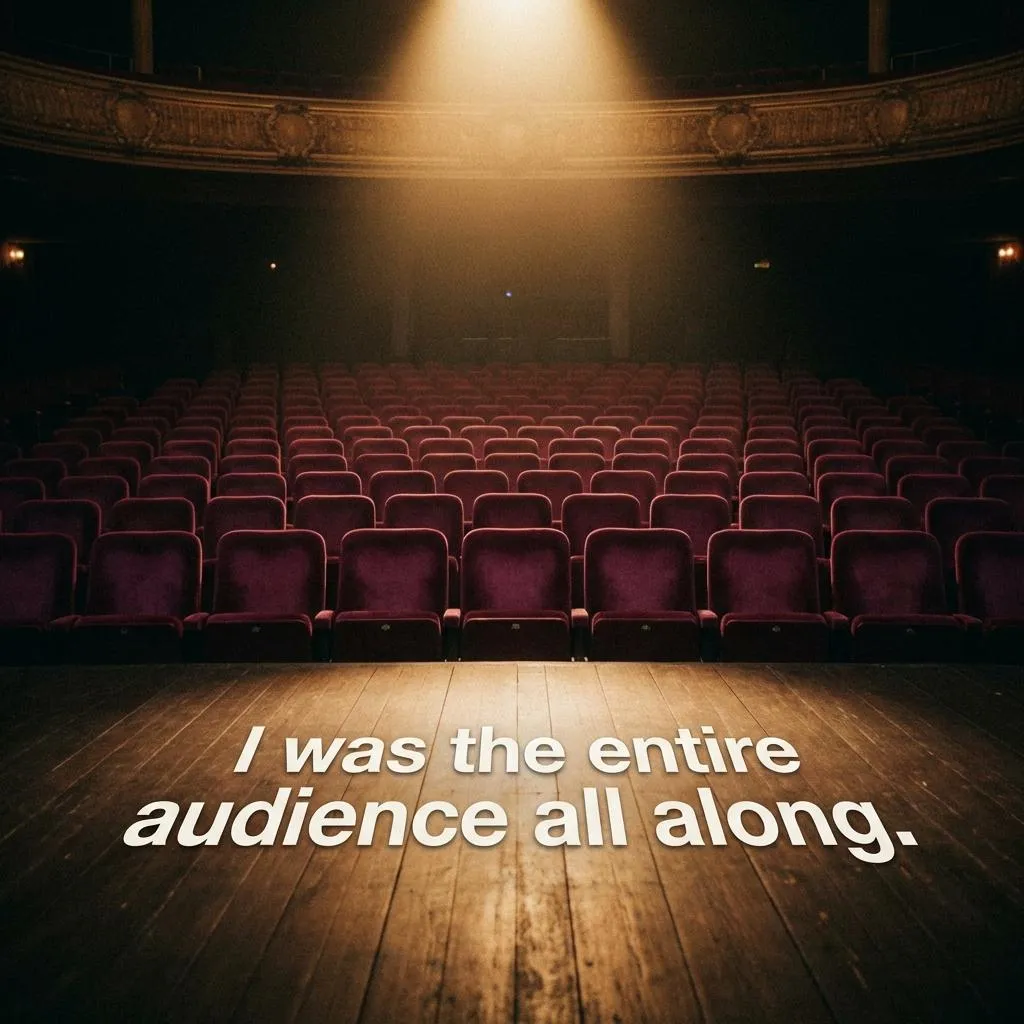
When I was grinding those 12-hour days, I thought everyone was watching.
My friends. My family. Society. Competitors.
It sounds egotistical and narcissistic to admit. But when you're in the middle of that fire, that's exactly how it feels.
Once I stepped back and viewed that life through a different lens, I realized something liberating:
Not only was no one watching—no one really cared except me.
I was the entire audience all along.
That realization gave me tremendous peace. I didn't have to perform for anyone because the only person I was performing for was myself.
The AI Wave Is Coming (And We're Not Ready)
Here's where this gets urgent.
Employee concerns about job loss due to AI have skyrocketed from 28% in 2024 to 40% in 2026. AI was cited as a factor in nearly 55,000 U.S. layoffs in 2025.
Goldman Sachs Research estimates AI could displace 6-7% of the U.S. workforce if widely adopted. The World Economic Forum predicts 85 million jobs will be displaced by 2030.
And here's the brutal truth: if the only way you're finding meaning in life is through your work, you're going to struggle hard when AI eliminates the work you're doing.
There's a deep existential dread that comes with having your identity stripped away. I know this from my business failure. It happened suddenly for me.
AI will be more of a slow burn. But it's going to be just as tragic and drastic in its results.
If you don't have a way to find meaning or purpose in other areas of life, your life will feel meaningless and you're going to add to the sum total of the misery of humankind.
I don't think that's too strong a statement.
What Actually Works
So what do you do if you realize your entire identity is wrapped up in your job title?
The Harvard Study of Adult Development—running for over 85 years—found that people who are most happy and content are the ones who focus on relationships.
Director Robert Waldinger put it bluntly: "Loneliness kills. It's as powerful as smoking or alcoholism."
The study found that satisfaction with relationships at age 50 was a better predictor of physical health than cholesterol levels.
So start there. Look at the people closest to you. Really focus on building those relationships.
I'm an introvert. Making friends has always been hard for me—not just because of my personality, but because I've been so wrapped up in my companies. There's a quote that being an entrepreneur is the loneliest job on the planet.
It's true.
But I've been making a more concerted effort to branch out, to find more friends, to build connections. Because those relationships bring meaning and joy that no business success ever could.
The Hard Truth About What Fear Costs You
You don't have to do everything at once.
Start small. Build systems in your business. Most business owners I work with have no systems at all—they're doing everything themselves, flying by the seat of their pants.
Put systems in place. Delegate them to employees or, in our case at Katuva, virtual assistants.
You can start with one small thing. Systemize it. Delegate it. Pick another thing. Systemize it. Delegate it.
Before long, you've freed up 10, 20, 30 hours a week of work you used to do.
Then look at other areas of your life where you want to experience more joy.
If you're missing your kids' sporting events or don't have time to take your spouse on a date because you're working, your life is passing you by.
And it will never return. You don't get that time back.
What Comes Next
When I came back from France, something shifted in my mindset.
I proved to myself that I could be just as productive—or more so—working fewer hours. But that wasn't even the point of the experiment.
The point was: can I get out of my own head about feeling lazy if I'm not working 12 hours a day?
The answer was a resounding yes.
I kept the same schedule when I returned. I added what Russell would call leisure activities. Those things bring me tremendous joy and meaning.
I don't feel the need to explain myself or perform for anyone anymore.
When people ask what I do for a living, I tell them. But I also mention my hobbies and the things I enjoy doing. I invite them to join me.
My life has become much more meaningful, much more nuanced, much more layered than it was before.
The main thing I want to tell other entrepreneurs still in that hustle-and-grind mode: you can be kinder to yourself and you can find meaning outside of working 12 hours a day.
You can be more empathetic and compassionate. You don't have to live this life that's been constructed for you by society.
But here's the paradox: that's exactly why I think most people won't believe me even if I tell them.
They've been so conditioned by Western culture that they have to do this or their business will fail, they're lazy, they're a bad person.
That conditioning is a tragedy of our time.
And with AI on the horizon, it's about to become a crisis.
The question isn't whether AI will disrupt work. It's whether you'll have an identity left when it does.


